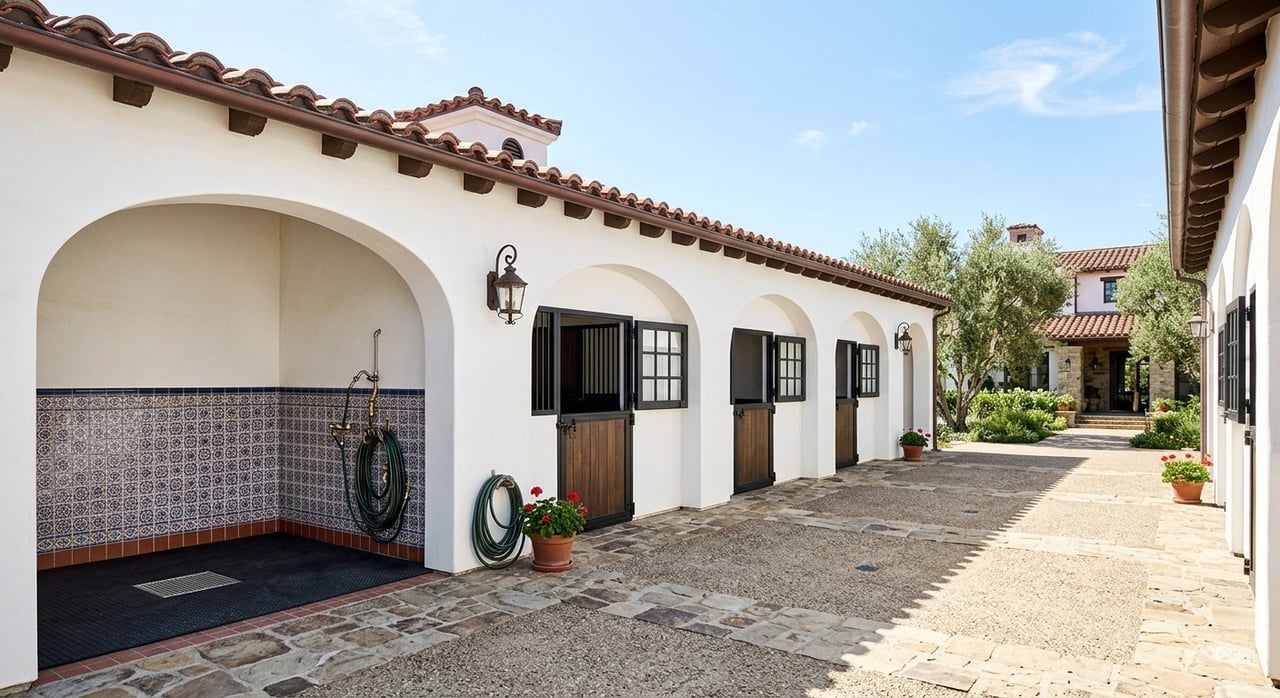
If you picture Rancho Santa Fe as all grand homes and gated driveways, you are only seeing part of the story. For many buyers, the real draw is a lifestyle built around land, trails, and horses. If you are exploring equestrian living here, it helps to understand what makes this community different and what to verify before you buy. Let’s dive in.
Why Rancho Santa Fe Stands Out
Rancho Santa Fe has a long-established equestrian identity, especially within the Covenant. The Rancho Santa Fe Association describes the Covenant as a low-density community with an average lot size of more than two acres across about 1,930 private and commercial properties.
That large-lot pattern matters because equestrian living here is tied to the land itself, not just to luxury branding. The community is also known for its rural character, private equestrian and hiking trails, and its location near the coast.
This is not a recent trend. Rancho Riding Club says it has served the community since 1946, and horse training and boarding at Osuna Ranch have continued since the property was annexed in 1938. That kind of history gives Rancho Santa Fe an equestrian foundation that feels woven into daily life.
Private Trails Shape the Lifestyle
For many horse-oriented buyers, the private trail system is the headline feature. The Rancho Santa Fe Association says the Covenant includes nearly 60 miles of equestrian and pedestrian trails for the exclusive use of Covenant residents and their guests.
These trails are part of what makes riding here feel distinctive. According to the Association, many sections are wide enough for two riders to travel side by side, with routes that pass through tree-covered areas, streamside stretches, and ocean-view segments.
A well-known portion of the system loops around the Rancho Santa Fe Golf Course. Trail rules also give useful insight into how the system operates: horses have the right-of-way, dogs must be leashed, motorized vehicles are not permitted, and riders are expected to stay on the trails.
If trail access is a major reason you are considering Rancho Santa Fe, one point is especially important. The private trail system is reserved for Covenant residents and their guests, so confirming whether a property is inside the Covenant should happen early in your search.
Open Space Adds to Daily Enjoyment
Equestrian living here is not limited to barns and riding rings. Open space is part of the broader appeal, giving the area a more expansive and rural feel.
The Association says Covenant residents may enjoy 68 acres of open space at the Arroyo property. The Coast-to-Crest Trail also runs through it, connecting Rancho Santa Fe to a broader regional trail network.
For buyers, that means the lifestyle can include more than horsekeeping alone. You may be choosing a property that supports riding while also giving you access to scenic outdoor space for walking and everyday recreation.
Boarding and Training Options Vary
One of the strengths of Rancho Santa Fe is that it does not rely on a single equestrian facility. Instead, the community includes Association-owned horse properties, private boarding barns, lesson programs, and discipline-specific training operations.
That variety can be a major advantage if you want flexibility. You might prefer to keep horses on your own property, board nearby, or combine home ownership with a training-focused setup elsewhere in the community.
Here are a few examples from the local equestrian ecosystem:
- Osuna Ranch is a 25-acre historic working horse ranch with boarding, 34 stalls, two arenas, expansive grass pastures, and miles of walking paths.
- Rancho Riding Club is an 11-acre facility in the Covenant offering boarding and care, training, private instruction, and summer camps. Its facility includes four riding arenas, 60 inside box stalls, 50 outside corrals, multiple turnouts, a round pen, large tack rooms, hot-water wash racks, and a free-flow exerciser.
- Rancho Cielo Equestrian Facility on the east side of Rancho Santa Fe advertises multiple boarding configurations with a trainer and access to miles of trails.
- Hegewisch Stables focuses on horseback riding lessons, hunter-jumper training, riding school programs, pony rides, and camps.
- Hap Hansen Stables centers on jumpers, equitation, and hunters, with a boarding-and-training agreement required before services are provided.
This mix gives you choices, but it also means you should compare facilities carefully. Services, disciplines, boarding configurations, and training styles can differ quite a bit from one property or program to another.
How Equestrian Estates Differ
An equestrian estate in Rancho Santa Fe is usually more than a beautiful home on a large parcel. In the Covenant, horsekeeping is regulated, which makes due diligence especially important.
The Rancho Santa Fe Association’s Animal Keeping Regulation says the minimum lot size for keeping horses or bovine cattle is two gross acres. It also says an animal-keeping permit is required, and fences or other animal facilities need separate construction permits subject to review.
That means you should not assume a property is horse-ready just because it has acreage. A parcel may look ideal at first glance, but the real value often depends on land-use rights, permit history, and whether the improvements already in place have the necessary approvals.
The Association’s architectural and design rules also emphasize preserving community character, maintaining separation between uses, and making sure parcel sizes provide adequate buildable area for the home and accessory amenities. In practice, that can affect how horse facilities are laid out and whether future changes are feasible.
What to Check Before You Buy
If you are serious about equestrian property in Rancho Santa Fe, a focused review can save you time and help you avoid expensive assumptions. A standard luxury home search is not always enough.
Start with these priorities:
- Confirm Covenant location if private trail access matters to you.
- Verify horsekeeping eligibility rather than assuming every large lot qualifies.
- Review permit status for barns, fences, arenas, corrals, and other accessory structures.
- Assess functional layout for trailers, equipment, storage, turnout, and day-to-day horse care.
- Decide on your preferred setup between on-site horsekeeping and boarding or training elsewhere.
This step matters because equestrian value often comes from how the property works, not only how it photographs. A home can be visually impressive and still fall short on practical horsekeeping needs.
Features Buyers Often Compare
When you look at horse properties or evaluate nearby boarding options, it helps to understand the kinds of features commonly found in the area. Based on local facilities, buyers often compare amenities such as:
- Box stalls
- Outdoor corrals
- In-and-out stalls
- Turnouts
- Dressage or jumping arenas
- Tack rooms
- Wash racks
- Round pens
Not every buyer needs the same setup. Some want a private estate with enough infrastructure for daily care at home, while others care more about trail access and a nearby boarding or training program.
Matching the Property to Your Lifestyle
The best equestrian home for you depends on how you plan to live, not just what is available. If you want to ride regularly on private trails, a Covenant property may be your top priority.
If you prefer professional support, you may focus more on access to boarding, lessons, or a discipline-specific training barn. In that case, the right purchase could be a luxury estate that supports the lifestyle without requiring full on-site horse infrastructure.
For some buyers, the ideal fit is a blend of both. You may want the space and privacy of Rancho Santa Fe living, along with the option to board or train within the community rather than manage every aspect of horse care at home.
Why Guidance Matters in This Search
Equestrian real estate is more layered than a typical home search. You are not only evaluating the house, but also access, regulations, improvements, and how the property fits your day-to-day routine.
That is where local guidance becomes valuable. A thoughtful search can help you narrow in on the properties that align with your riding goals, land-use needs, and preferred level of hands-on horsekeeping.
In Rancho Santa Fe, the appeal comes from the combination of large-lot living, private trails, regulated horsekeeping, and a long-established network of barns and clubs. If you want help finding a property that fits that lifestyle, connect with Baris Yucelt for a personalized, relationship-first approach to your Rancho Santa Fe home search.
FAQs
What makes Rancho Santa Fe appealing for equestrian living?
- Rancho Santa Fe offers a combination of large-lot properties, a long-established horse culture, private equestrian trails in the Covenant, and access to boarding and training facilities throughout the community.
What should you verify before buying a horse property in Rancho Santa Fe?
- You should confirm whether the property is inside the Covenant, verify horsekeeping eligibility, review permit status for horse-related improvements, and evaluate whether the layout works for your intended use.
Do all large properties in Rancho Santa Fe allow horses?
- No. In the Covenant, the Rancho Santa Fe Association says the minimum lot size for keeping horses is two gross acres, and animal-keeping permits are required.
Why does Covenant location matter for Rancho Santa Fe equestrian buyers?
- Covenant location matters because the private trail system is reserved for Covenant residents and their guests.
What equestrian services are available in Rancho Santa Fe?
- Rancho Santa Fe includes boarding, training, riding lessons, camps, and discipline-specific programs through facilities such as Osuna Ranch, Rancho Riding Club, Rancho Cielo Equestrian Facility, Hegewisch Stables, and Hap Hansen Stables.
How is an equestrian estate different from a standard luxury home in Rancho Santa Fe?
- An equestrian estate often includes added considerations such as horsekeeping eligibility, permit history, barns, arenas, fencing, turnout areas, and circulation for trailers, equipment, and daily care.